Variation in Handmade Objects
5
min read
Light is often discussed in terms of function: how bright a room is, how clearly it allows us to see, how efficiently it performs. Yet in everyday spaces, light operates less as a measurable quantity and more as an ambient presence. It settles into rooms, softens edges, and quietly shapes how a space feels long before it determines how well it works.
Diffusion and Softness
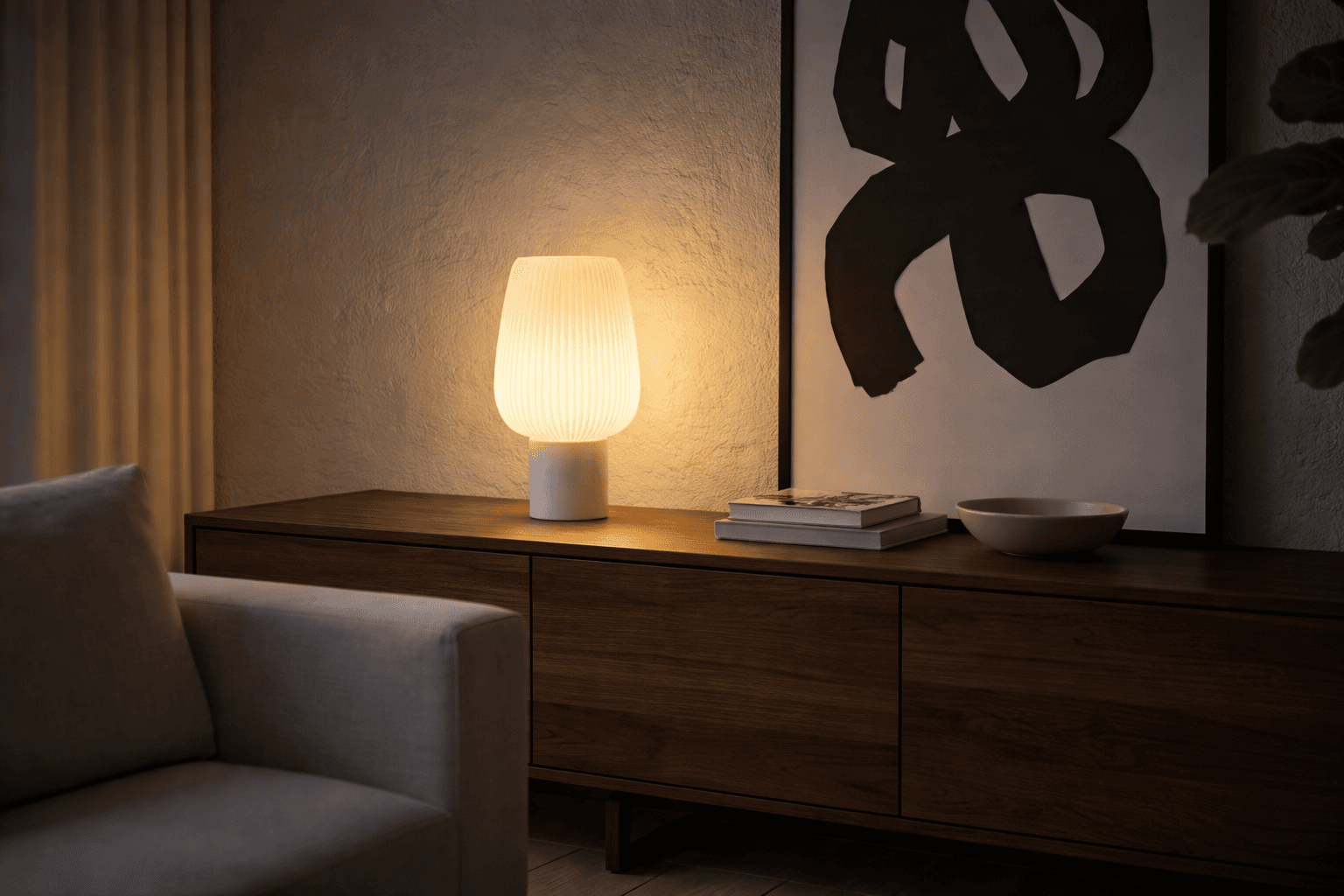
Rather than acting as a spotlight, atmospheric light is diffuse and indirect. It arrives through reflection – bouncing off walls, ceilings, and surfaces – spreading evenly without drawing attention to its source. This softness reduces contrast and glare, allowing the eye to move comfortably through space. In such conditions, light becomes something we inhabit rather than something we look at as part of spatial experience.
Diffusion plays a key role in this experience. Translucent materials, textured surfaces, and layered planes break light apart, slowing it down and dispersing it. Curtains, frosted glass, paper screens, or even matte finishes transform harsh illumination into a gentle glow. These interventions do not add more light; they reshape its character, turning brightness into atmosphere.
Everyday Atmospheres
In everyday environments, this atmospheric quality supports calm and continuity. Spaces lit softly feel more expansive and more forgiving, allowing for rest, focus, or casual movement. Light shifts gradually across the day, registering time through subtle changes in tone and shadow rather than abrupt transitions. The space remains legible while never feeling overexposed or visually overstimulating.
Light as Spatial Material
Seeing light as atmosphere also reframes design decisions. Instead of prioritizing fixtures or output, attention moves to how light interacts with surfaces and volumes. Corners, thresholds, and ceilings become active participants in shaping mood. The goal is not uniform brightness but a balanced field of illumination that holds the space together.
When light is treated as an ambient condition rather than a technical solution, it gains emotional weight. It can make ordinary rooms feel grounded, intimate, or open without overt gesture. In this way, light becomes a quiet architectural material—one that shapes experience through softness, diffusion, and presence rather than intensity.