Working with Knit as Structure
5
min read
Knitted textiles are often understood as surface – soft skins that wrap, decorate, or insulate. But when you work closely with knit, another role emerges: knit as structure. In this mode, fabric is no longer passive. It becomes an active system that carries tension, defines volume, and shapes how light and space are experienced.
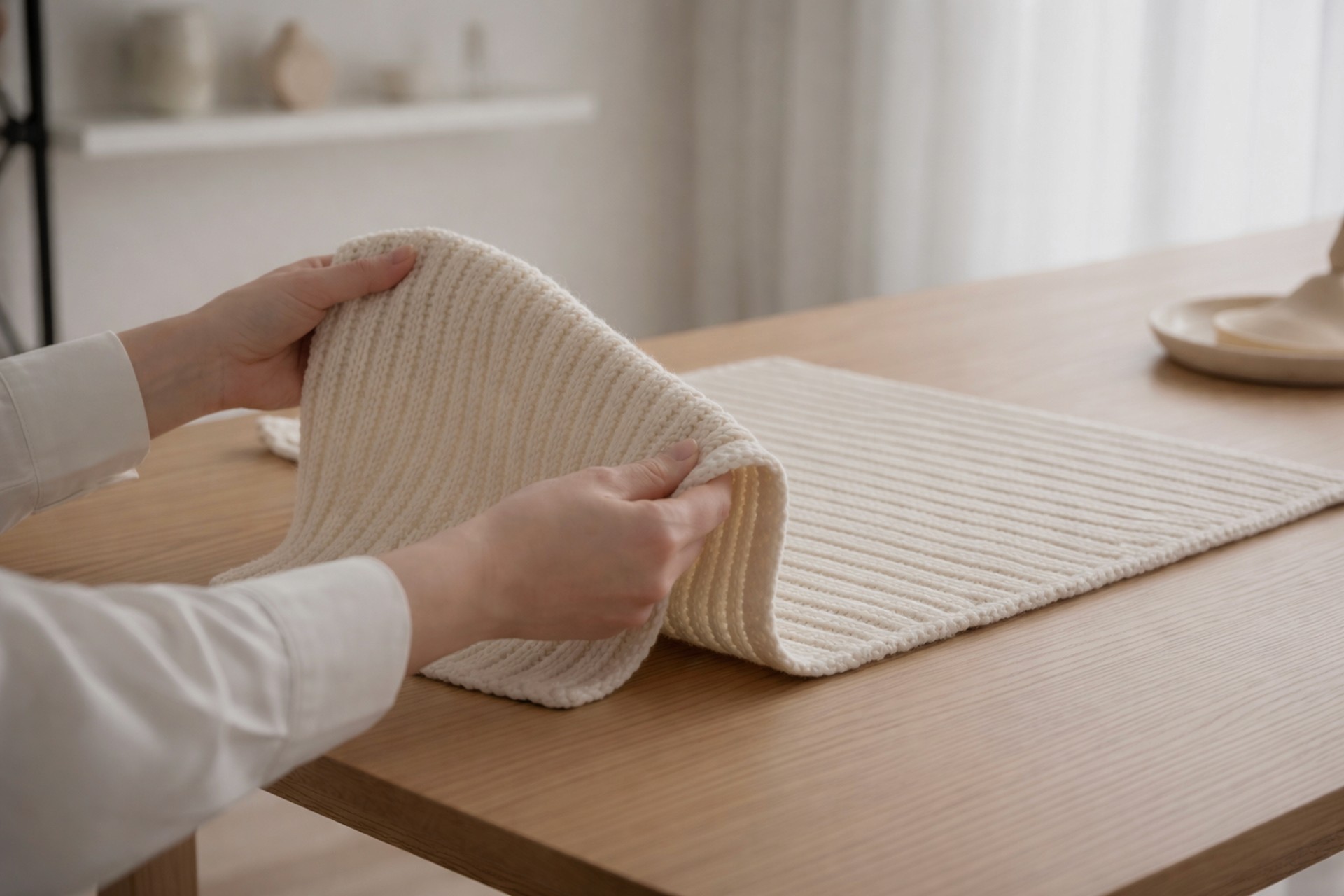
Unlike woven textiles, knit is inherently elastic. Each loop depends on the next, creating a network that responds dynamically to force. Stretch, compression, and release are not side effects; they are fundamental properties. When knit is used structurally, form is not imposed from the outside but negotiated through tension. The material decides as much as the maker does through embodied material behavior.
Form, Tension, and Adaptability
This flexibility allows knit to operate between states. It can behave as a membrane or as a frame, collapsing or holding depending on how it is supported. Small adjustments – changes in stitch density, yarn thickness, or direction of pull – can radically alter the outcome. Structure becomes adaptive rather than fixed, capable of subtle movement and continuous transformation over time, use, and environmental conditions.
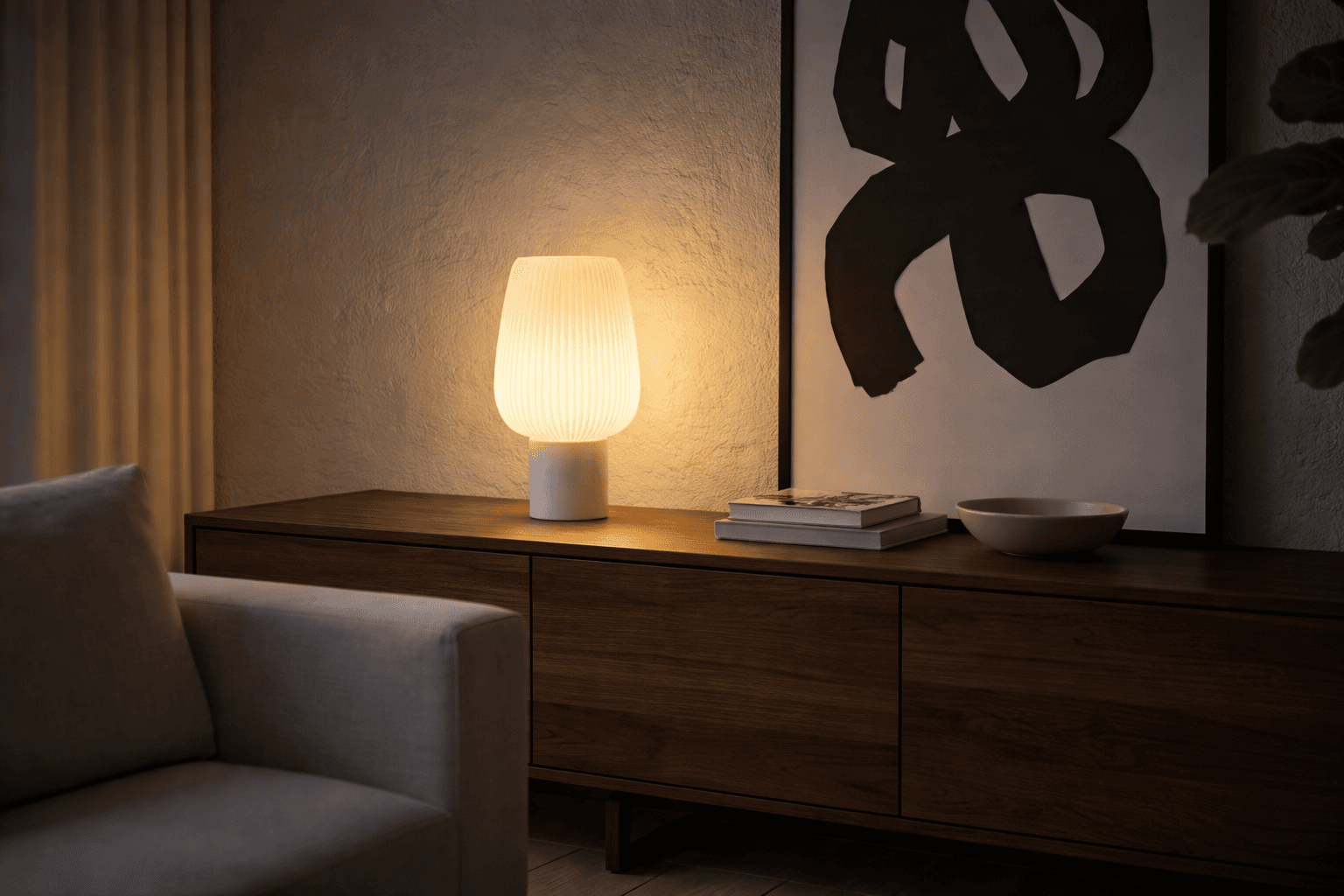
Light plays a crucial role in revealing this behavior. Open stitches admit light, casting patterned shadows that shift with the material’s deformation. Denser areas absorb light and assert mass. As knit stretches, its porosity changes, making light a visible indicator of tension and stress.
Soft Strength and Material Intelligence
Working with knit as structure challenges conventional hierarchies between hard and soft materials. Strength does not rely on rigidity alone but on the distribution of force across a flexible system. The logic is closer to biological structures – muscle, skin, connective tissue – than to traditional architectural frameworks. Form emerges through balance rather than control within dynamic systems.
To design with knit structurally is to accept unpredictability. Outcomes cannot be fully drawn or modeled in advance; they must be tested, stretched, and observed. The process is iterative and material-led. What results is not a static object but a responsive form – one that holds space while remaining sensitive to touch, gravity, and light.
In this approach, knit is no longer merely a textile. It is an active participant in shaping form, negotiating tension, and modulating perception. Structure becomes something felt as much as seen, and material intelligence takes center stage.